White-Capped Pionus: A Compact Parrot With a 30-Year Commitment
The white-capped pionus, the smallest member of the eight pionus species, presents a unique mix of traits for prospective bird owners: it is feisty yet laid-back, intelligent yet shy around strangers. However, those considering this parrot must be prepared for a long-term commitment, as these birds can live for 30 years or more, according to avian experts.
Native to the forests and woodlands of Central America and Mexico, white-capped pionus parrots typically inhabit dense growth, where they nest in hollow tree trunks and palms. In the wild, they are often found in flocks of about a dozen, and they are known to be mostly silent and peaceful creatures.
Temperament and Training
White-capped pionus parrots are described as feisty and comical, yet sweet and affectionate with their owners. They are intelligent and respond well to training when owners are patient and consistent. These birds thrive on social interaction and mental stimulation, enjoying activities like playing and learning tricks. However, they tend to become shy around strangers and often bond closely with a single person whom they trust most.
Owners should be vigilant when the bird is out of its cage, as its notoriously curious nature can lead it into trouble if not closely supervised. They may attempt to steal items like pens or buttons, turning everyday objects into games.
Vocalization and Noise Level
Compared to other hookbill parrots, white-capped pionus are generally quieter, making them suitable for apartment living. However, a noisy household with children, dogs, or loud televisions can teach these birds to be vocal. They have the ability to talk, but often clam up around unfamiliar people. Their speaking voice is not always crystal clear, often raspy, but owners can usually make out what they say. They typically learn simple words, such as names, and mimic common sounds like whistles and beeps.
Appearance and Sexing
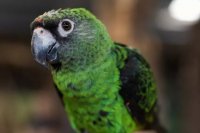
Juvenile white-capped pionus parrots appear dull and dingy compared to adults, a camouflage that helps protect them from predators. Mature adults are mostly green and dark blue, covering the head, throat, chest, belly, and back, with yellow-green patches on their shoulders and red feathers under their tails. The species is monomorphic, meaning males and females look alike, and genetic testing or surgical sexing is required to determine sex.
Care and Housing
Cages suitable for Amazons are recommended for white-capped pionus, with dimensions of at least 4 feet tall, 4 feet long, and 2 feet wide, and bar spacing no larger than 3/4 inch. Owners may notice a wheezing sound when the bird is frightened or excited, which is normal, and a musky or sweet odor that some find unpleasant. Regular baths or showers are advised.
Health concerns include susceptibility to fungal infections, visceral gout, and aspergillosis, which is indicated by heavy breathing. Vitamin A deficiency is also a potential issue.
Diet and Exercise
In the wild, these parrots eat fruits, berries, seeds, blossoms, and corn. In captivity, a high-quality seed and pellet mix, supplemented with fresh bird-safe fruits and vegetables, is recommended. Corn on the cob is a favorite treat. Owners can provide unlimited pellets, but fresh foods should be offered in portions of about 1/8 to 1/4 cup in the morning and evening.
Exercise is crucial; white-capped pionus need 3 to 4 hours of supervised time outside the cage daily, in a bird-proofed area with windows closed and ceiling fans off. A playpen with climbing ropes, chains, bells, and toys is ideal.
Adoption and Purchase Considerations
Before acquiring a white-capped pionus, prospective owners are encouraged to visit local breeders or aviculture societies to observe the birds and learn about daily care. These parrots are available from breeders, avian specialty stores, and occasionally rescue organizations, with prices ranging from $400 to $900. When choosing a bird, ensure it is alert, active, with bright eyes and clean feathers, and ask breeders about their experience. Similar species to consider include the sun conure, Pacific parrotlet, and white-fronted Amazon.