Considering a Finch? Key Facts on Social Habits, Housing, and Sound
Finches, among the smallest birds commonly kept as pets, present a unique set of considerations for prospective owners. Unlike parrots, these tiny birds—most species under 4 inches long and weighing less than 1 ounce—have distinct social, handling, and noise profiles that potential owners should understand before bringing them home.
One of the most debated topics in aviculture is whether finches are classified as softbills or hardbills. While parrots are universally recognized as hookbills, finches occupy a gray area. Some experts argue that because finches primarily eat seeds rather than insects or nectar, they should be classified as waxbills or hardbills. Others counter that since they lack the hooked beak characteristic of hookbills, they fit the softbill category. This taxonomic debate has persisted for years without a definitive resolution, reflecting the complexity of avian classification.
Social Needs: Companionship Over Human Interaction
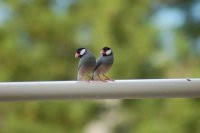
Finches are inherently social creatures, but their social bonds are primarily directed toward other finches rather than humans. Aviculture experts generally recommend keeping finches in pairs or small flocks to meet their social requirements. A finch kept alone may experience health and emotional issues due to lack of companionship, making it essential for owners to consider housing multiple birds.
Unlike parrots, which often form strong attachments to their human caretakers and require daily handling, finches typically do not cope well with direct human interaction. Frequent touching can cause stress and fear in these delicate birds. While finches may become accustomed to human presence from a distance, they rarely become comfortable with being handled. Owners are advised to limit handling to essential health checks and medical care, allowing the birds to observe from a safe distance.
Housing and Space Requirements
Despite their diminutive size, finches require more spacious accommodations than one might expect. Their small stature—most species under 4 inches long—might suggest they are ideal for compact living spaces, but the opposite is true for their cages. Finches need a larger enclosure than some parrot species to accommodate their natural flight behavior. A spacious cage is necessary to allow them to fly and exercise their wings, which is crucial for their physical well-being.
Noise Levels: A Quiet Companion
For bird lovers living in apartments or condominiums, finches offer a significant advantage: they are notably quiet. While finches may vocalize as frequently as other pet birds, their voices are soft and do not carry as far as the calls of larger birds like parrots. Their gentle chirping typically remains confined to the room where they are housed, and many owners find the soft sounds soothing. This characteristic makes finches a suitable choice for those who want the joy of bird ownership without the noise that can disturb neighbors.
In summary, finches are a unique pet bird option that requires careful consideration of their social, spatial, and auditory needs. Prospective owners should be prepared to provide companionship in the form of other finches, a spacious cage for flight, and a respectful distance in terms of handling. In return, they gain a quiet, gentle presence that can be a calming addition to a home.