Alexandrine Parakeets: From Royalty to Family Companion
Alexandrine parakeets, named after Alexander the Great who reportedly transported them from Punjab to Europe, have been prized companions for centuries. These medium-sized parrots, native to India and Sri Lanka, are known for their striking green plumage, impressive talking ability, and deep bonds with their owners. However, they are not low-maintenance pets; they require significant space, daily interaction, and a commitment that can span decades.
In the wild, Alexandrine parakeets inhabit forests, woodlands, agricultural lands, and mangrove forests up to 3,000 feet in elevation. Feral populations now exist in several European countries, including Spain, England, Belgium, the Netherlands, and Germany, as well as in Turkey, the Arabian Peninsula, Iran, and Hong Kong. This spread reflects their adaptability and the historical trade in exotic birds.
Personality and Vocal Nature
Hand-fed Alexandrine parakeets are generally affectionate and can form strong attachments to a single person, often becoming "one-person birds" that may shy away from other household members. This trait is typical of Asiatic parakeets and can be managed with early socialization. A notable challenge for new owners is the adolescent "bluffing" phase, which occurs between 4 months and 1 year of age. During this period, birds may exhibit hormonal and aggressive behavior, lasting from two weeks to two years depending on the individual.
Their vocalizations are powerful and carry over long distances, making them unsuitable for apartments or homes with close neighbors. They can produce a variety of calls, including ringing sounds, deep "klak" noises, and a resounding "gr-aak" call. Their calls are deeper and louder than those of the Indian Ringneck parakeet, and they are excellent mimics of human speech.
Physical Characteristics and Markings
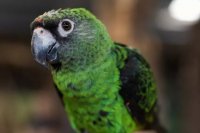
Alexandrine parakeets are slender birds, reaching up to 25 inches in length, with a significant portion of that being their long tail feathers. They are slightly stockier than Indian Ringnecks. Their plumage is predominantly green, with blue-grey cheeks and neck, a yellow-green abdomen, and a red patch on the shoulders. They have a large red beak with a yellow tip, and their tail is yellow underneath, green and blue on top, with a yellow tip.
Sexual dimorphism is evident in adults: males have a black and rose-colored ring around their necks, while females lack these markings. This makes it relatively easy to distinguish between sexes in mature birds.
Housing and Diet
Despite their medium size, Alexandrine parakeets need spacious cages to accommodate their long tails. A minimum cage size of 3 feet tall and 2 feet long and wide is recommended. They enjoy frequent bathing and playing in water; a large water bath should be provided at least once a week, and occasional misting is appreciated.
Their diet should consist of fresh vegetables, leafy greens, grains, some seeds, tree nuts, and a high-quality commercial pelleted diet. Owners are advised to offer 1/4 to 1/2 cup of pellets and a similar amount of fruits and vegetables daily, adjusting based on the bird's appetite. Uneaten food should be removed to prevent spoilage.
Health Considerations and Adoption
Alexandrine parakeets are generally healthy, but they are susceptible to several conditions, including Polyomavirus (a deadly virus affecting hatchlings and juveniles), Psittacosis (also known as parrot fever, which can be transmitted to humans), and Aspergillosis (a fungal respiratory infection). Regular veterinary check-ups are essential.
For those interested in acquiring an Alexandrine parakeet, adoption and rescue organizations are a good starting point. The cost typically ranges from $500 to $1,500. Reputable breeders should be able to provide information about their experience and the bird's health. It's important to observe the bird for signs of good health, such as bright eyes, clean feathers, and a full crop.
Alexandrine parakeets are intelligent, social, and can be wonderful companions for the right owner. However, their need for space, time, and mental stimulation means they are not suitable for everyone. Prospective owners should carefully consider their lifestyle and living situation before bringing one home.