Moustached Parakeet: A Comprehensive Guide to Care and Ownership
The moustached parakeet, a medium-sized parrot with a distinctive black stripe above its beak resembling a well-groomed mustache, is gaining attention among bird enthusiasts for its outgoing personality and ability to mimic human speech. Native to Southeast Asia, this species is found in China and the Indonesian islands, with several subspecies and feral populations spreading to urban areas as their natural habitat shrinks. For those considering a parrot that can perch on a shoulder and engage in playful interaction, the moustached parakeet presents an intriguing option.
In the wild, these birds inhabit woodlands, hills, and mountains, forming flocks of up to 60 individuals. Their loud warning calls are unmistakable, and during mating season, pairs leave the flock to nest in tree cavities until their chicks are mature. This social structure carries over into captivity, where they thrive on interaction and can become deeply bonded to their owners.
Temperament and Social Needs
Hand-fed and properly socialized moustached parakeets make affectionate pets, though they are known to be bossy or needy at times, demanding attention when they feel ignored. They are generally more relaxed than the boisterous Indian ringneck parakeet, but they do not typically enjoy extensive cuddling, preferring gentle petting near the neck. With regular, gentle handling, they may warm to more physical affection.
These birds are highly intelligent and trainable, but they can develop aggression issues if not adequately socialized. They often choose a favorite person and bond strongly, sometimes acting out toward others. Like other Asiatic species, they go through a bluffing stage during adolescence, marked by biting and territorial behavior. This, combined with their need for extra attention, may make them less suitable for novice bird owners, though opinions vary.
Male moustached parakeets are particularly known for their talking ability, rewarding owners with years of comical companionship when properly cared for. They are also among the quieter parrot species, preferring pleasant whistles and chatter over ear-piercing screams, making them a potential choice for those who want a parrot but prefer less noise.
Appearance and Sex Differences
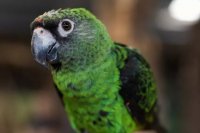
The moustached parakeet displays a vibrant array of colors, with brilliant green and yellow wings and back, greenish-blue tail feathers, and a powder-blue head. The characteristic black "mustache" stripes frame the beak, and the rose-colored breast fades into a bluish-turquoise belly. This species is dimorphic, meaning males and females can be distinguished by appearance: males have a bright orange upper mandible with a yellow tip, while females have a dark gray or black beak. Color mutations occasionally occur, resulting in more blue or turquoise in the plumage.
Housing, Diet, and Health Considerations
As pets, moustached parakeets are less common than some other species and are often available only through specialty breeders. They require a spacious cage, at least 3 feet by 2 feet by 3 feet, and should not be housed with other birds, as females tend to dominate males. These inquisitive birds are explorers and need supervised time outside the cage to satisfy their curiosity, often perching on shoulders to be part of the action.
In terms of diet, a varied menu is essential. In the wild, they eat fruits, seeds, and blossoms. For pets, a high-quality commercial pellet formula, a seed mixture, and fresh foods are recommended. Owners should provide about 1/4 cup of pellets and 1/4 cup of fresh fruits and vegetables daily. They are generally good eaters, willing to try a range of produce such as melon, apple, kale, strawberries, carrots, collard greens, and banana. Avocado should be avoided as it is toxic to these birds. Seeds should be given in moderation to prevent obesity, though they are a valuable source of protein.
Moustached parakeets are hardy, but they can be susceptible to several health conditions, including polyoma, a deadly avian virus; sarcocystosis, a parasitic disease; aspergillosis, a fungal infection; bacterial infections; vitamin A deficiency; and psittacosis, also known as parrot fever. Regular veterinary check-ups and a clean environment are crucial for prevention.
Exercise is vital for these active birds. They need at least four hours of supervised playtime outside the cage daily in a bird-proofed area. A large cage equipped with ladders, swings, and chew toys made of wood, leather, or beads will keep them stimulated and out of trouble.
Acquiring a Moustached Parakeet
Prospective owners should contact local breeders and visit their birds to gauge personalities and get a sense of what living with a moustached parakeet entails. Prices from breeders range from $250 to $1,000. Animal shelters and rescue organizations are also worth checking, and online resources like Bird Breeders, Hookbills for Sale, and Adopt a Pet can help locate birds. When buying from a breeder, it is important to interview them, inspect the living conditions, and talk to past customers. Red flags include cramped quarters, inactive birds, and breeders who are evasive or lack knowledge about their birds.
For those considering similar species, the Indian ringneck parakeet, Alexandrine parakeet, and red-lored Amazon are worth exploring. Ultimately, the moustached parakeet can be a loyal and entertaining companion for the right owner, particularly one who can devote time to their social and exercise needs.